

Florida Pool Care
Pool Care Built for Florida Water, Weather & Wildlife
Hard water, aggressive pollen, sudden afternoon downpours, and year-round sun all push Florida pool chemistry around in ways most national guides never mention. Here’s how to keep up with it.
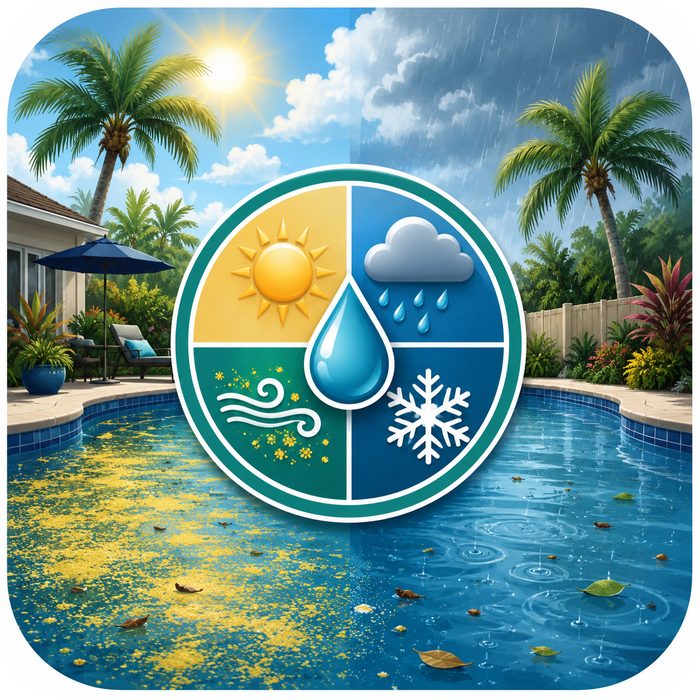
Hard water
Calcium buildup and scaling from Florida’s mineral-heavy water.
Rainy season swings
Why afternoon storms reset your chemistry overnight.
Pollen load
Spring pollen film and the organic debris it brings.
Year-round sun
UV exposure and near-constant use, all twelve months.
Pool care built for Florida water & weather
Hard water, pollen, rain, and sun all push chemistry around in ways most national guides skip entirely.
Florida’s hard water problem
Much of Central Florida’s tap and well water runs high in calcium and minerals. Over time that shows up as scaling on tile lines, cloudy water, and extra wear on heaters and salt cells. A calcium hardness test and an occasional sequestrant treatment go a long way toward keeping it under control.
Rainy-season chemistry swings (June–September)
Afternoon storms are practically a daily event in summer, and each one dilutes your water and shifts pH and alkalinity. Build a simple post-storm habit: test within a few hours of heavy rain, rebalance alkalinity first, then chlorine.
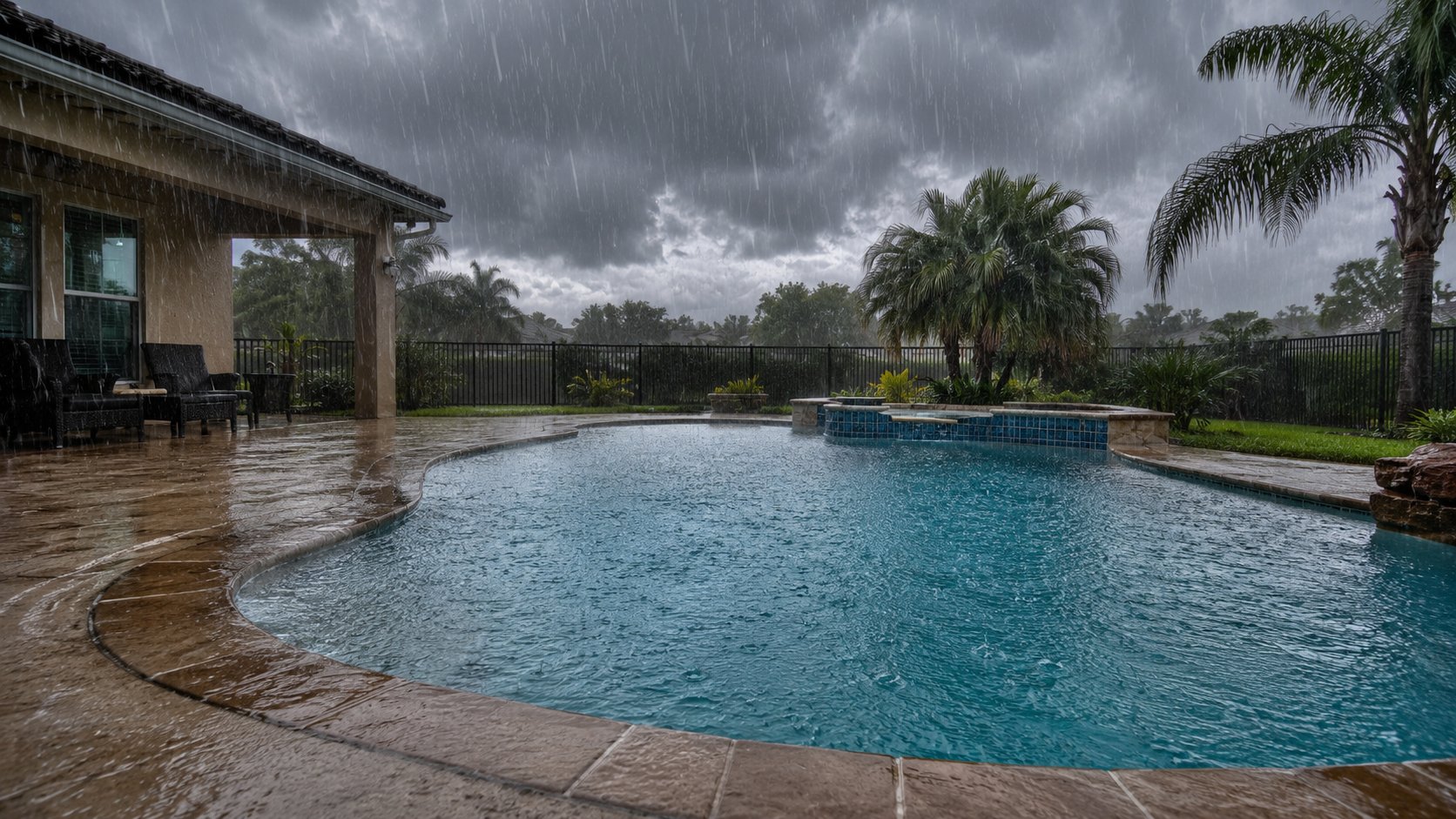
Pollen & organic debris season (March–May)
Oak pollen leaves a yellow-green film on the water and feeds algae if it’s left to sit. It’s an organic load problem more than an algae problem at first — extra filtration time and more frequent skimming usually solve it before it gets serious.
Year-round sun & UV exposure
Florida pools see far more sun hours per year than most of the country, which burns off chlorine faster and breaks down stabilizer (cyanuric acid) over time. Keep CYA in the 30–50 ppm range to help chlorine hold up under constant UV, and expect to top it off occasionally.
A simple seasonal care calendar
- Spring (Mar–May): pollen season — skim daily, shock more often
- Summer (Jun–Sep): rainy & hurricane season — test after every storm
- Fall (Oct–Nov): leaf drop and cooling water — clean baskets often
- Winter (Dec–Feb): lighter use, but Florida sun still demands routine checks
Frequently asked questions
Why is my pool water cloudy after it rains?
Rain dilutes your chemistry and can wash in fine debris and pollen, both of which scatter light and make water look hazy. A quick test and rebalance after the storm usually clears it within a day.
Does Florida’s hard water damage pool equipment?
It can over time — calcium scaling builds up on heaters, salt cells, and tile lines. Testing calcium hardness periodically and treating with a sequestrant when it’s high helps protect equipment.
Do I need to treat for pollen separately from algae?
Pollen is an organic debris problem, not algae itself, but leaving it to sit gives algae something to feed on. Extra skimming and filtration during pollen season usually heads off an algae bloom before it starts.
Is year-round swimming bad for my pool surface?
More use means more wear, but it’s manageable with normal upkeep. The bigger factor for Florida pool surfaces is usually water chemistry balance and UV exposure, not swimmer traffic alone.
Related pool topics
New Pool Owner Starter Pack
Just moved into a home with a pool? This checklist covers your first week: safety barriers, water testing basics, what to ask a service tech, and which permit rules may apply to your county.
Central Florida Pool Guide is reader-supported. When you buy through links on our site, we may earn an affiliate commission at no extra cost to you.