
Some links in this article may be affiliate links. See our disclosure policy.
Quick Answer: After a hurricane or tropical storm, do not jump straight into shocking the pool or restarting the pump. First make sure the pool area is safe, check for downed power lines or submerged equipment, remove large debris, empty the skimmer and pump baskets, and confirm the equipment pad is dry and safe to operate.
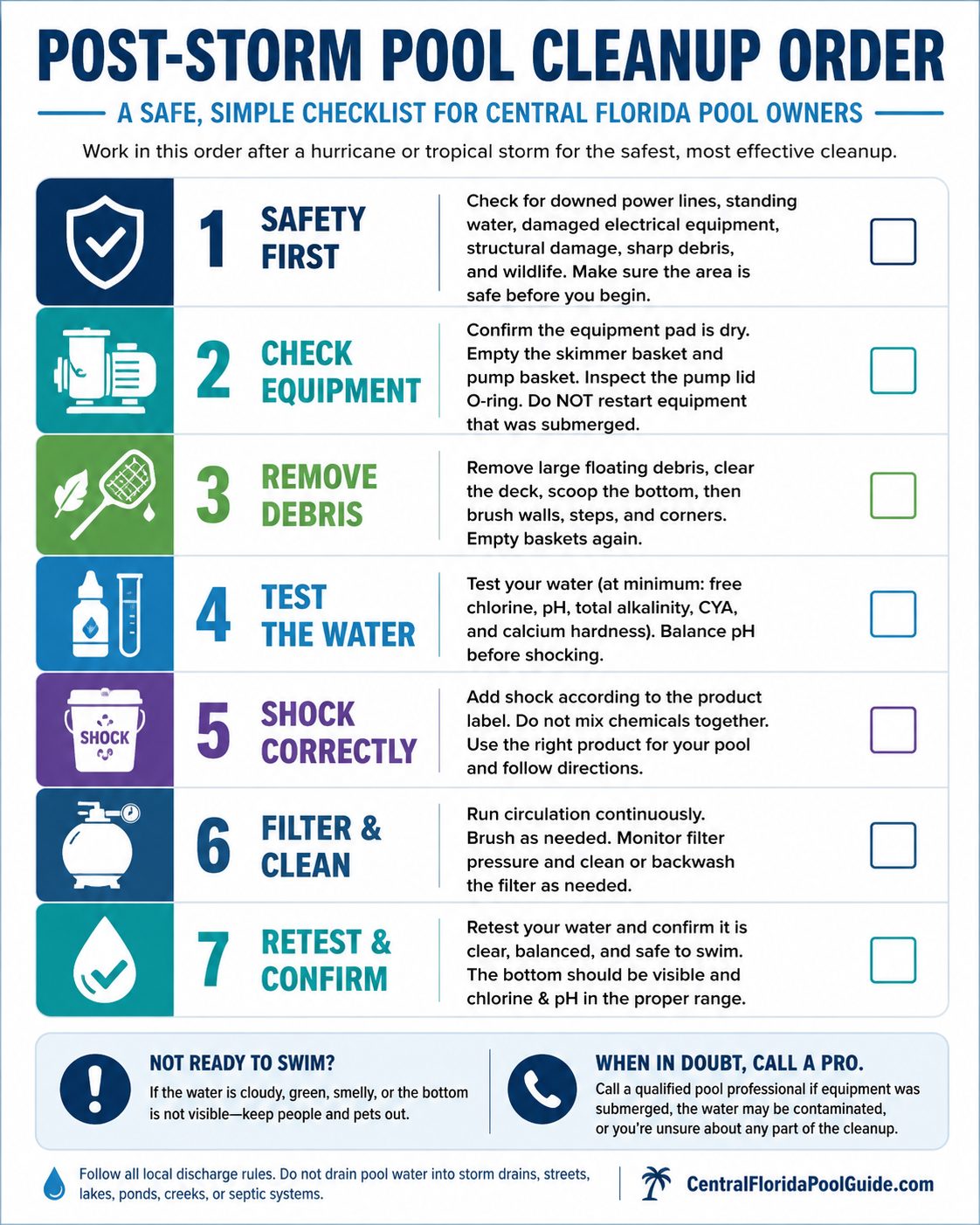
For most Central Florida pools, heavy rain, leaves, pollen, dirt, and runoff can turn the water green or cloudy. The usual cleanup sequence is: remove debris, check equipment, test and balance the water, shock according to the product label, brush, filter, clean the filter, retest, and repeat only as needed. Avoid draining the entire pool as a default cleanup step — as we note in our hurricane prep guidance, draining an inground pool after major rain can be risky because high groundwater can cause a pool to lift or “float.”
A pool may be back to clear, swimmable condition in 24–48 hours after a lighter storm, but a green, cloudy, debris-heavy, or flood-contaminated pool can take several days or longer, especially if the equipment was underwater, the filter is overwhelmed, or runoff brought in mud, fertilizer, sewage, or other contaminants.
Start With Safety Before Pool Cleanup
After a tropical storm or hurricane, the first step is not chemicals. It is safety. Before walking into the pool area, check for:
- Downed or sagging power lines
- Standing water around electrical equipment
- A flooded equipment pad
- Broken screen enclosure pieces, metal, glass, roofing material, or sharp debris
- Snakes, frogs, rodents, insects, or other wildlife
- Mud, sewage, chemical containers, or fuel/oil contamination
- Loose pavers, cracked decking, leaning fences, or damaged pool barriers
UF/IFAS Extension advises pool owners not to begin cleanup until the area has been assessed as safe, and specifically notes the risk of downed power lines and unexpected wildlife after storms. The CDC also warns that floodwater can contain sharp objects, sewage, chemicals, and displaced animals or insects, so homeowners should avoid unnecessary contact with contaminated water. Sources: CDC Healthy Swimming.
If there is any chance the water around the pool contains sewage, fuel, pesticides, or other hazardous material, treat the pool as contaminated and keep people and pets away until it is professionally evaluated.
What to Check Before Restarting Pool Equipment
Pool equipment should only be restarted after the area is dry, safe, and visually inspected. Water and electricity are the biggest post-storm concern.
1. Make sure the equipment was not submerged
If the pump motor, automation panel, heater, salt system, outlet, timer, breaker, or electrical controls were underwater, do not turn the system back on.
The Electrical Safety Foundation International (ESFI) warns that water-damaged electrical equipment can create long-term fire, shock, or electrocution risk even after it appears dry, and recommends evaluation by a qualified electrician before returning power to any water-damaged equipment. Source: ESFI: Water-Damaged Electrical Equipment.
Call a licensed electrician or qualified pool professional if the equipment pad was underwater, breakers tripped during the storm, the pump hums but does not start, the motor smells burnt, the timer, automation panel, salt cell control box, or heater display is wet, there is standing water around the equipment, or you see damaged conduit, exposed wiring, or a broken bonding wire.
2. Empty the skimmer basket
Storm debris often clogs skimmer baskets fast. Leaves, seed pods, palm fronds, mulch, acorns, and screen enclosure debris can block water flow and starve the pump. Before restarting circulation, remove the skimmer lid and empty the basket. If the basket is cracked or warped, replace it before running the pump.
3. Empty the pump basket
Turn the system off before opening the pump lid. Remove leaves, twigs, and other debris from the pump basket. Check the pump lid O-ring for grit or damage before closing it again. A clogged pump basket can restrict flow, make the pump lose prime, and put extra strain on the motor.
4. Check the water level
After heavy rain, the pool may be above the normal operating level. In most pools, the ideal water level is around the middle of the skimmer opening. If lowering the water is necessary, do it carefully and follow local discharge rules.
Orange County warns homeowners not to drain pool or spa water into a septic system, street, storm drain, creek, pond, lake, river, or other surface water body, and to keep discharge water on the property, chlorine-free, and contaminant-free. Source: Orange County Pool Pollution Prevention.
5. Check the filter pressure
Once the pump is running safely, check the filter pressure gauge. A sudden high reading may mean the filter is clogged with storm debris. A very low reading may mean poor flow, a clogged basket, a suction blockage, or a priming issue. Clean or backwash the filter according to the filter type and manufacturer instructions.
Safe Debris Removal Order
The best post-storm cleanup order is simple: remove the big debris first, protect the equipment, then treat the water.
Step 1: Remove large floating debris
Use a leaf net or skimmer net to remove leaves, palm fronds, branches, screen pieces, seed pods, and other floating debris. Do not run an automatic pool cleaner through heavy storm debris — it can clog the cleaner, hose, pump basket, or suction line.
Step 2: Remove debris from the deck
Clear the pool deck before brushing or vacuuming. Otherwise, wind and foot traffic can push more dirt and leaves back into the water. Keep an eye out for nails, screws, aluminum screen frame pieces, roofing debris, broken glass, and sharp palm debris.
Step 3: Scoop the bottom
Use a deep leaf rake to remove heavy debris from the floor. This matters because decomposing organic material can stain pool surfaces and use up chlorine quickly.
UF/IFAS Extension notes that debris should be removed before it decomposes and causes staining.
Step 4: Empty baskets again
After removing debris, check the skimmer basket and pump basket again. They often refill quickly during the first cleanup cycle.
Step 5: Brush walls, steps, benches, and corners
Brush the pool before or after the first shock treatment, depending on how much debris remains. Brushing helps loosen algae, dirt, and fine particles so the filter and sanitizer can work.
Step 6: Vacuum only after the large debris is out
Vacuuming too early can clog the system. Once the pool is mostly free of large debris, vacuum slowly. If the pool has mud, silt, or heavy sediment, a pool professional may need to vacuum to waste or use portable cleanup equipment.
How to Handle a Green or Cloudy Pool After Heavy Rain
A green or cloudy pool after a Central Florida storm is usually caused by a mix of rain dilution, low chlorine, organic debris, dirt, pollen, algae growth, and runoff from lawns or landscaping. Heavy rain can also wash fertilizers, pesticides, soil, pet waste, and other contaminants toward the pool.
Florida DEP stormwater materials explain that sediment can cloud water and excess nutrients can contribute to algae blooms.
Do not drain the whole pool as the first move
For normal storm cleanup, draining the whole pool is usually not the right first step. It can create a serious structural risk after days of heavy rain because the groundwater around the pool may be high.
As we explain in our hurricane prep content, an inground pool should generally stay full during storm season unless a qualified professional advises otherwise. There are exceptions: if true floodwater, sewage, storm surge, fuel, or chemical contamination entered the pool, a professional may recommend draining, purging plumbing lines, and replacing filter media — but that decision should be made carefully with groundwater conditions, local discharge rules, and equipment safety in mind.
A practical shock-treatment sequence
For a typical green or cloudy pool after heavy rain, use this sequence:
1. Remove debris first
Do not rely on chlorine to “burn through” piles of leaves, mulch, branches, or dirt. Physical debris removal comes first.
2. Confirm the pump and filter can run safely
Only start circulation after confirming the equipment pad is dry and the pump, baskets, filter, and electrical components are safe.
3. Test the water
Use a reliable test kit or take a water sample to a pool store. At minimum, check free chlorine, pH, total alkalinity, cyanuric acid/stabilizer, calcium hardness (especially for plaster pools), and salt level if applicable.
CDC recommends keeping pool pH in the 7.2–7.8 range and maintaining a free chlorine concentration of at least 1 ppm. For pools using cyanuric acid or stabilized chlorine products, CDC recommends a pH range of 7.0–7.8 and a higher minimum free chlorine level of at least 2 ppm, since cyanuric acid reduces how effectively chlorine kills germs. Source: CDC Healthy Swimming.
4. Balance pH before shocking
Shock works better when pH is in the proper range. If pH is far out of range, adjust it before adding shock.
5. Shock according to the product label
Use the correct shock product for your pool type, surface, and sanitizer system. Follow the label exactly. Do not mix chemicals together, and do not add chemicals at the same time unless the product directions specifically allow it.
CDC warns that pool chemicals can injure people when mixed together or used without proper protective equipment.
6. Brush the pool
Brush the walls, floor, steps, benches, tile line, and corners. This helps expose algae and debris to chlorine and filtration.
7. Run filtration and clean the filter as needed
Once the system is safe, run circulation long enough to clear the water. The filter may need frequent cleaning or backwashing during the first day or two because storm debris and algae can clog it quickly.
8. Retest before swimming
Do not swim just because the water looks better. Confirm the water is clear, the bottom is visible, sanitizer is holding, and pH is in range. If the water is still cloudy, green, smelly, or the bottom is not visible, keep people and pets out.
When DIY Cleanup Is Reasonable
DIY cleanup may be reasonable when the equipment pad stayed dry, no electrical components were submerged, there is no sewage, fuel, storm surge, or chemical contamination, the pool has normal storm debris such as leaves and small branches, the water is green or cloudy but not muddy or contaminated, the pump primes normally, the filter pressure is manageable, and you can safely remove debris and test the water.
For many screened Central Florida backyard pools, the homeowner can handle the first round of cleanup: remove debris, empty baskets, brush, test, shock, filter, and retest.
When to Call a Pool Pro
Call a qualified pool professional if the pool equipment was underwater, the pump will not prime or keeps losing prime, the breaker trips when the pump starts, the pool has mud, silt, sewage, fuel, or chemical contamination, the pool is so cloudy that the main drain or deep end is not visible, a large tree, screen enclosure section, roof debris, or metal object fell into the pool, the water stays green after repeated treatment, the filter pressure remains unusually high or low, the pool surface is stained after debris removal, you suspect damage to plumbing, valves, heater, automation, salt system, or lights, or there is wildlife in the pool that cannot be safely removed.
If the pool was affected by actual floodwater rather than just rain, treat it more seriously — floodwater may contaminate a pool with chemicals, fertilizers, oil, gasoline, sewage, germs, silt, and debris, and contamination can remain after floodwaters recede.
Realistic Timeline: When Will the Pool Be Swimmable Again?
There is no single timeline because every storm and pool is different. A lightly affected pool may recover quickly. A pool with heavy debris, poor circulation, or contaminated runoff can take much longer.
| Pool Condition | Realistic Timeline | Notes |
|---|---|---|
| Light rain, minor leaves, equipment dry | 24–48 hours | Usually requires debris removal, testing, balancing, and normal filtration. |
| Cloudy water after heavy rain | 1–3 days | Often needs pH correction, shock, brushing, filtration, and filter cleaning. |
| Green pool with algae | 2–5 days | May require repeated brushing, sustained chlorine, and frequent filter cleaning. |
| Heavy debris or muddy runoff | 3–7+ days | Depends on how much sediment entered and whether vacuum-to-waste or professional cleanup is needed. |
| Floodwater, sewage, fuel, or submerged equipment | Professional evaluation first | Do not swim or restart equipment until safety and contamination risks are addressed. |
The pool is not ready for swimming until the water is clear, the bottom is visible, free chlorine and pH are in a safe range, the pump and filter are operating normally, there is no visible algae, debris, or contamination, and there are no electrical, structural, or wildlife hazards.
What Not to Do After a Storm
- Do not swim in cloudy, green, or contaminated water.
- Do not restart submerged equipment.
- Do not touch breakers with wet hands or while standing in water.
- Do not drain the entire pool as a default cleanup step.
- Do not discharge pool water into storm drains, streets, lakes, ponds, creeks, or septic systems.
- Do not mix chlorine with acid, ammonia, or unknown chemicals.
- Do not run an automatic pool cleaner through heavy debris.
- Do not ignore filter pressure.
- Do not assume the pool is safe just because the water looks clearer.
Local Central Florida Notes
Central Florida pool owners should be especially careful after storms because many homes sit near lakes, retention ponds, wetlands, drainage easements, or low-lying areas. After a major rain event, groundwater may be high even if the pool deck looks dry.
For Orange, Seminole, Osceola, and Lake county homeowners, the safest approach is to keep water on your property when lowering the pool level, avoid storm drains and surface waters, avoid draining during active heavy rain, check county guidance before large discharges, and call a professional before any full or major drain-down.
Orange County specifically warns that pool and spa water may contain chemicals and materials that can harm lakes, rivers, springs, wetlands, aquatic animals, and water quality if improperly discharged. Source: Orange County Pool Pollution Prevention.
FAQ
Should I drain my pool after a hurricane?
Usually, no. Do not drain the whole pool as a normal cleanup step after heavy rain. High groundwater after a storm can push an inground pool upward and cause major structural damage. If the pool has true floodwater, sewage, fuel, or chemical contamination, call a qualified pool professional before deciding whether draining is necessary.
Can I swim once the pool looks clear?
Not yet. The pool should be clear, the bottom should be visible, and the water should test in a safe range for sanitizer and pH. CDC recommends proper pH and chlorine levels because chlorine does not work as effectively when pH is out of range.
What if my pool pump was underwater?
Do not turn it on. Submerged pool equipment should be evaluated before use. Water-damaged electrical equipment can create shock, fire, and electrocution risks even after it dries.
Why did my pool turn green after the storm?
Storms can dilute chlorine, blow in organic debris, introduce dirt and pollen, and wash nutrients or contaminants from the yard into the pool. Once chlorine drops and debris builds up, algae can grow quickly. The fix is not just adding shock — remove debris, check equipment, test and balance the water, shock correctly, brush, filter, clean the filter, and retest.
Bottom Line
After a hurricane or tropical storm, the safest pool cleanup plan is to slow down and work in the right order: safety first, equipment second, debris third, chemistry fourth.
For a normal rain-and-debris cleanup, many Central Florida homeowners can handle the first pass themselves. But if the equipment was submerged, the water may be contaminated, the pool is full of mud, or the pump will not run normally, call a qualified pool professional before making the situation worse.
By the Central Florida Pool Guide team.
This article is for general information and is not a substitute for professional electrical, structural, or water-quality inspection. If in doubt about safety or contamination, contact a qualified professional before restarting equipment or using the pool.